by Abby Schill
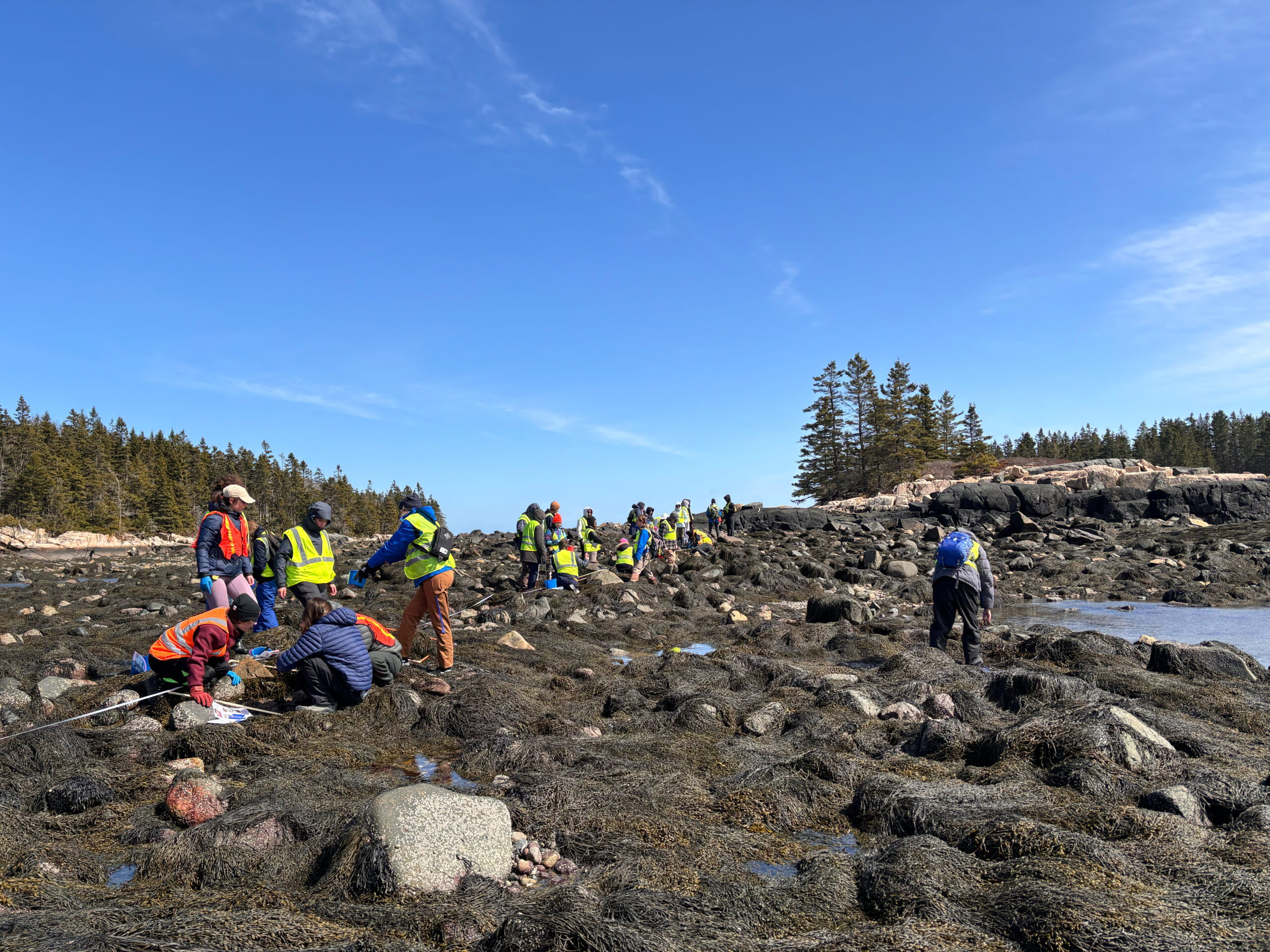
Fall on the Schoodic Peninsula is vibrant – filled with changing leaves and crashing waves, migrating birds soaring over the ocean, the air turning crisp and cool, wind whistling through the newly bare branches, middle school students in neon vests making their way to the intertidal zone, and near-constant laughter emanating from wherever the gaggle of excited students happen to be.
This fall was different. The foliage was still beautiful and the waves were wild, but campus felt muted. There were no school groups, no middle school students here with their classmates and teachers as part of the Schoodic Education Adventure (SEA) program. The lapse in federal government appropriations meant significant changes to park operations, including that SEA could not run.
Nine schools were scheduled to participate, each spending 2 nights and 3 days with us. More than 300 students missed out on their opportunity to experience Acadia. What else did they miss?
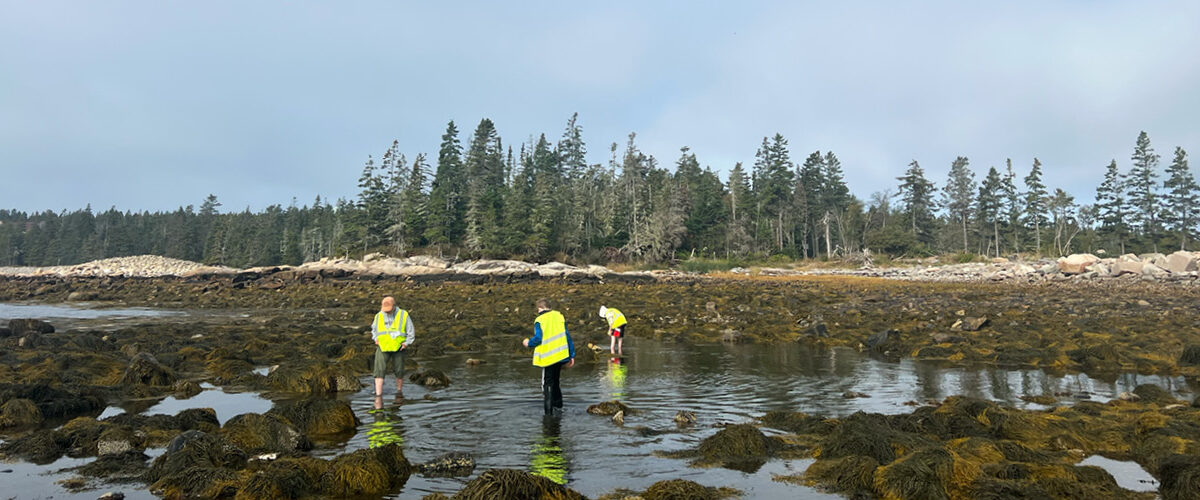
3 days at SEA means learning, in the most hands-on way possible, about the ecosystems all around us. It means exploring Schoodic’s trails, getting to know the spruce and fir and birch trees that fill our forests. It means staring into tidepools, hoping to find all three species of periwinkle, catching a glimpse of a sea urchin, or uncovering European green crabs from their rocky hideaways. It means participating in citizen science projects, collecting data about the prevalence of invasive crab species, or monitoring the seasonal changes of plants along our phenology trail. It means working up the courage to cross the slippery, “buttered-spaghetti-on-ice” rockweed covered rocks, or walking the campus paths at night, or spending nights away from home for the first time. It means getting to know classmates and teachers in a space so far from the classroom that the social norms and hierarchies that rule so many middle schools no longer apply.
I’m sad for myself and the other SEA educators that our fall season was so vastly different than what we expected. While many of us were still able to work, developing new activities or organizing curriculum, we missed our furloughed federally-employed colleagues – the NPS Education staff – whom we typically work alongside every day. And we missed the energy and purpose that being outside with SEA students gives us. My favorite part of my job is getting to interact with students, to see what gets them excited, to convince them to play silly games and then watch them have fun, to see them explore and do things they’ve never done before or see things they see all the time in a new light.
But mostly, I’m thinking about those 300 students who didn’t get to come here. SEA is special, not easy to replace or replicate, and the fact that it simply didn’t happen for so many middle schoolers this fall is disappointing. A SEA experience is fun and exciting, and also potentially transformative. Students are learning about science in ways they may not have before, bonding with classmates, experiencing more independence than perhaps they’re accustomed to, and spending time outside here, exploring and laughing and playing in the special place that is the Schoodic Peninsula. Developing a positive association with outdoor spaces and a personal connection to place is at the heart of the SEA program, because when kids have fun and learn somewhere, they care about it, whether or not they realize it in the moment. Maybe they continue caring about it as they grow up, or maybe they find new places to love, but giving young people the opportunity to learn about and love an outdoor place feels incredibly important.
We missed a lot this fall. The lines of students wandering the campus paths, the bouncing of basketballs outside the bunkhouse, the campfires and tidepooling and meal time antics. The invasive crab and phenology data that would have been collected, leaving holes in our long-term projects. But most importantly, I think, we missed the opportunity to give 300 students a chance to be welcomed, to have fun, to learn, to grow, and to care about this place and their relationship with it.
The government is reopening and we are transitioning to a slower winter of online programming and preparing for spring, when SEA will return and the sounds of neon-vested middle schoolers running around will emanate from campus once again. I can’t wait for the experiences they will have and all that they will learn and do, but I’ll still be thinking about this fall, these students, and this disrupted season.