by Natalia Portales and Chris Nadeau
Ever wonder how natural resource managers decide when and how to take action, such as restore a wetland, replace a culvert, or plant vegetation? These decisions may seem sudden from the outside, but they are typically grounded in years – sometimes decades – of careful data collection and analysis.
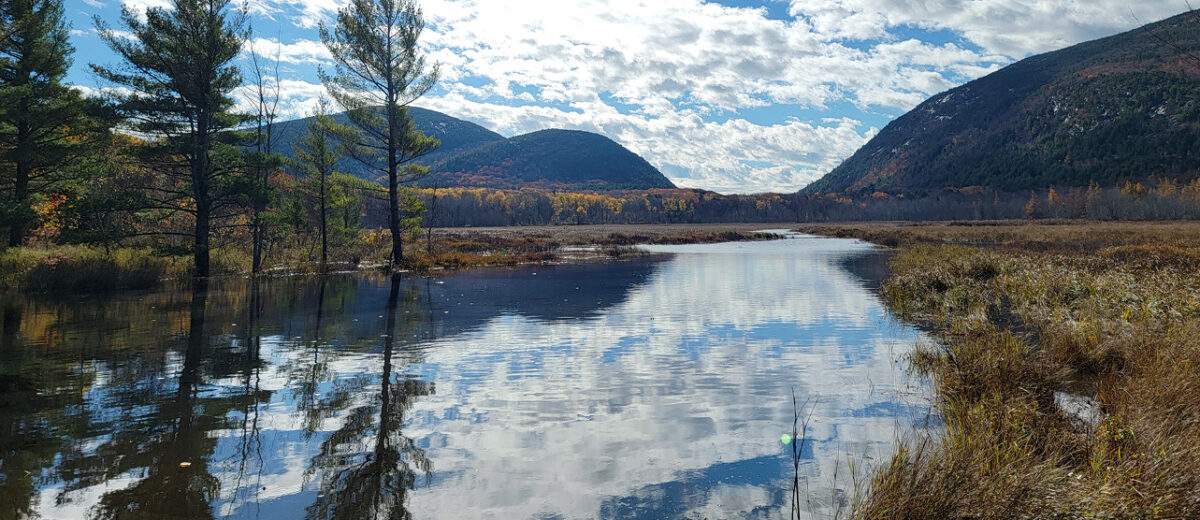
That’s exactly the case at Great Meadow, the largest freshwater wetland in Acadia National Park. You may encounter construction-related closures along the Park Loop Road in 2026. It’s part of a larger effort to restore the health of this important ecosystem. The existing culvert where Cromwell Brook flows out of the wetland and under the road is too small, restricting the natural flow of water and affecting wetland function. Replacing it is a key step toward restoring more natural hydrology that will benefit plants and animals throughout the wetland.
The Great Meadow StoryMap and accompanying data dashboards were created to share the “why” behind this work. Over many years, Schoodic Institute, the National Park Service, and Friends of Acadia have collected data on vegetation, hydrology, land use, and other factors. By bringing these datasets together, we can better understand how the wetland has changed, and the reason a culvert replacement should improve wetland health.
More importantly though, this project highlights how data-driven decision making supports the stewardship of ecologically and culturally significant places like Great Meadow, while also making that information more accessible to the public, scientists, and managers alike.