Schoodic Institute’s 2026 Summer Lecture Series
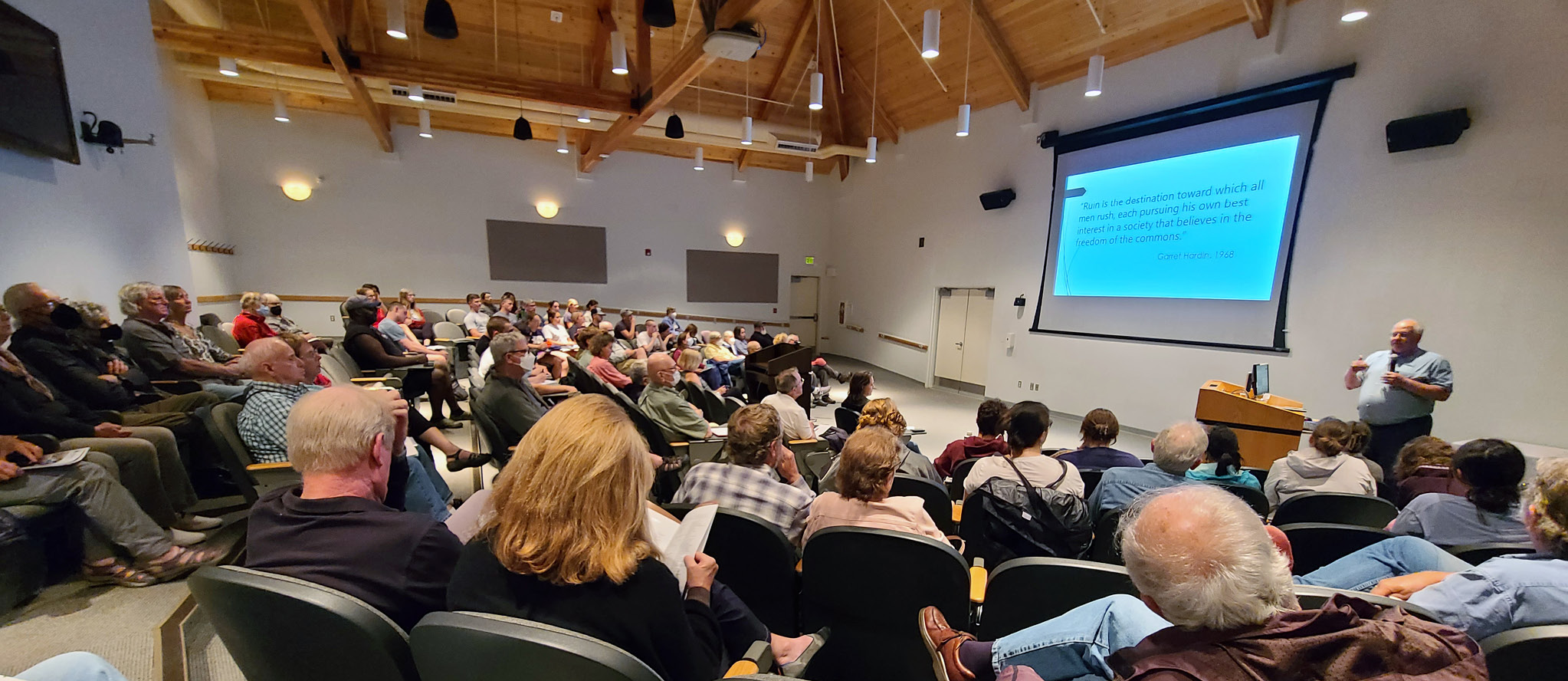
Join us this season for our Summer Lecture Series at Schoodic Institute! Beginning in June, we will be offering monthly public lectures – all free and open to the public (registration is required). All public lectures will take place at Moore Auditorium on Schoodic Institute’s campus in Winter Harbor, with a Zoom option as well. These lectures will be recorded and made available on our YouTube channel.
ANNOUNCING THIS SEASON’S LINE-UP
June 23: Hope on a Changing Planet: Science, Democracy, Nature, and Us, featuring Dr. Peter Reich (University of Michigan’s Director of the Institute for Global Change Biology and most cited ecologist worldwide). In the past, it was enough of a challenge being a global change scientist trying to learn what we humans are doing to the planet’s climate and natural systems, and how we might use such information to support nature and better manage ecosystems for multiple purposes we humans care about. In our 2026 series premiere, Dr. Reich will share how much of our hope in this realm involves finding and supporting the synergies between biodiversity, climate mitigation, social justice, and economic vitality — in forests, grasslands, croplands, and the waters that surround them. And how, now, we somehow must do all this while defending and promoting science, and working to save democracy.
July 21: Designing Plastic Out of the Ocean Economy, featuring Abby Barrows (Principal Investigator for the Global Microplastics Initiative with Adventure Scientists and marine scientist, researcher, and oyster farmer). After years documenting microplastic pollution worldwide, marine researcher Abigail Barrows turned her focus toward prevention. This talk traces the journey from measuring plastic contamination in marine ecosystems to redesigning aquaculture systems that eliminate plastic gear entirely. Featuring field-tested innovations from Maine oyster farms, the presentation explores how practical design changes can reduce pollution, protect marine life, and create more resilient coastal economies.
August 11: Trees of Acadia: The Past, Present, and Future of Park Forests, featuring Catherine Schmitt (author and Science Communication Specialist) with Matthew Duveneck (forest ecologist and Schoodic Institute Second Century Stewardship Fellow), Kate Miller (quantitative ecologist with the National Park Service), and Allen Workman (author and historian). From the sharp spires of spruce and fir at the edge of ocean cliffs, to mountain forests, cedar swamps, maple meadows, and pine barrens, Acadia National Park would not be Acadia if not for the trees. The most common ecosystem across the park, forests support a diversity of wildlife, protect lakes and streams, and clean the air. These forests are special for many reasons. Located in a transition zone between warm temperate forest and cool boreal forest, between mountains and the sea, Acadia’s trees support a unique assemblage of plants, animals, lichen, and moss. Under Wabanaki care for millennia, trees inspired action that resulted in conservation of what became Acadia National Park. Today, Acadia hosts some of the oldest and healthiest woodlands in the Eastern United States, but their future is uncertain. In this talk, Schoodic Institute Science Communication Specialist Catherine Schmitt discusses her new book, Trees of Acadia, with a panel of experts.
September 8: Skywatching: Human-Bird Relationships Through Time, featuring Dr. Bonnie Newsom (Associate Professor of Anthropology and Associate Faculty in the Climate Change Institute at the University of Maine), Angi King Johnson (interpretive naturalist and raptor specialist), and Olivia Olson (M.S. University of Maine and Public Programs and Volunteer Manager at Lake Champlain Maritime Museum). In this panel discussion, Dr. Bonnie Newsom will present on Wabanaki cultural associations with birds. These stories are grounded in gifts and creations Wabanaki ancestors left behind in shell mounds, and Olivia Olson will share her analysis of bird-related materials recovered from cultural heritage spaces in and beyond Acadia. Angi King Johnston, lead volunteer for the Cadillac Mountain Hawk Watch, will make connections from past to present, describing trends observed over the last thirty years of watching the skies from the highest mountain on the East Coast.

Our 2026 Summer Lecture Series events are free, thanks to support from our generous sponsor, Bar Harbor Bank & Trust.
Schoodic Institute is the conservation science expert leading the response to rapid change facing parks, people, and the planet. By participating in events at Schoodic Institute, you are contributing to our mission of inspiring science, learning, and community for a changing world and helping to support research and education for all ages.