story + photos by Izzy Andrus
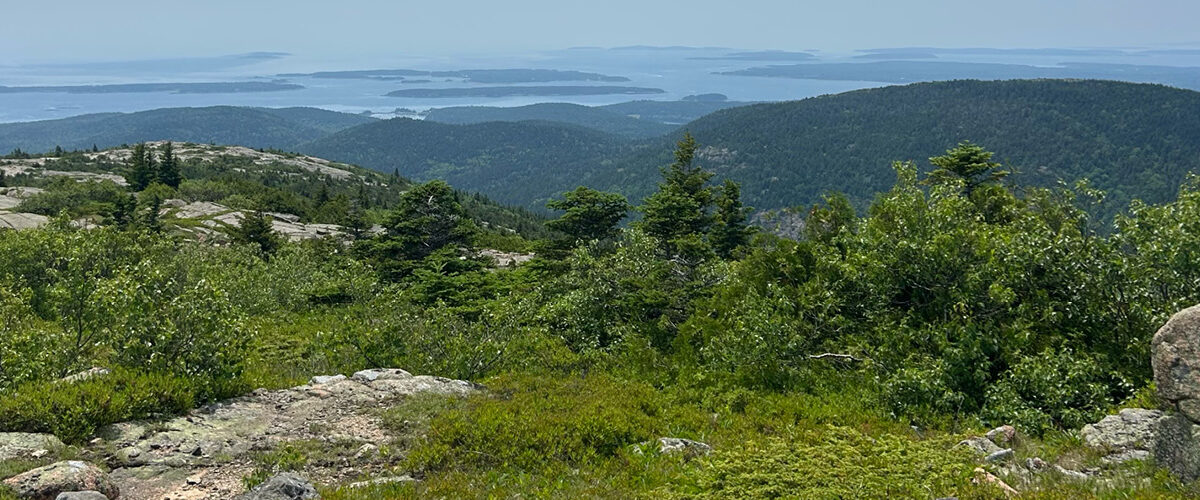
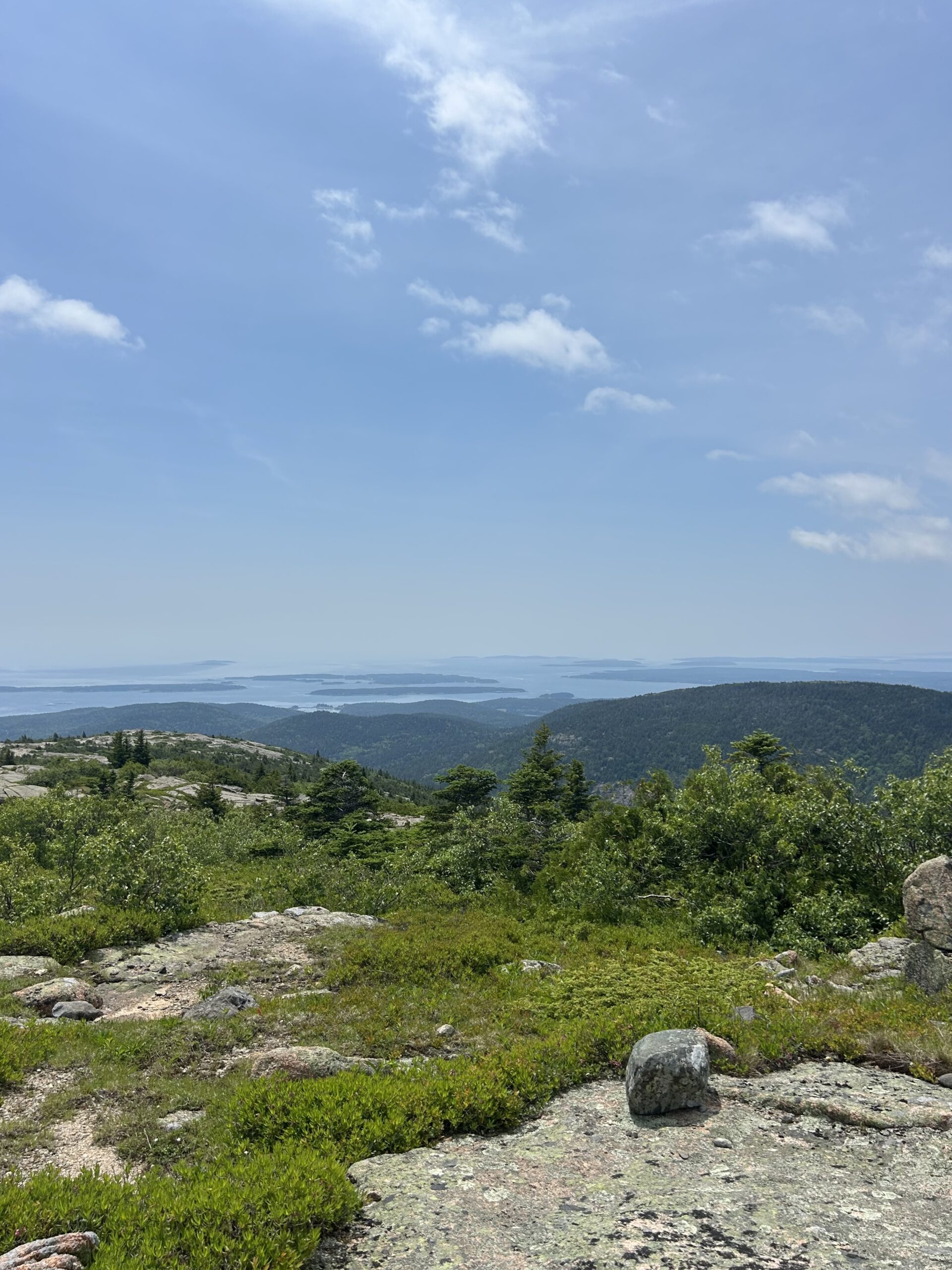
For a few months of the year, Cadillac Mountain is the first place in the United States to see the sunrise. For a brief moment in time, you can feel the world waking up as the sun breaks the skyline and blankets the landscape in its brilliant beams of light. This moment feels so special and intimate, and although it is in many ways, it’s also one of the most popular times to visit Cadillac Mountain. Acadia consistently sees some of the highest visitation rates of national parks in the country, with millions of visitors coming each year. And it’s understandable why. In a time when humans have become exceedingly disconnected from nature, Acadia feels like a safe haven of natural beauty. Although it is extraordinarily important to foster people’s curiosity and reverence for nature, our interactions with the environment can sometimes cause harm.
Much of my time as an intern here at Schoodic Institute centered around researching the interactions between humanity and nature. My main project focused on finding ways to help restore nature on Acadia’s mountain summits from the impacts of high visitation levels. The millions of footsteps taken on these mountains dislodge soil, inhibiting seedlings from rooting and growing. These high-altitude zones, home to 145 unique plant species, have seen a loss in vegetation cover, threatening the fragile web of life that begins with these plants. Without sufficient soil stability, many seedlings lose the ability to grow. On their own, these ecosystems struggle to regenerate, even when left untouched for decades.
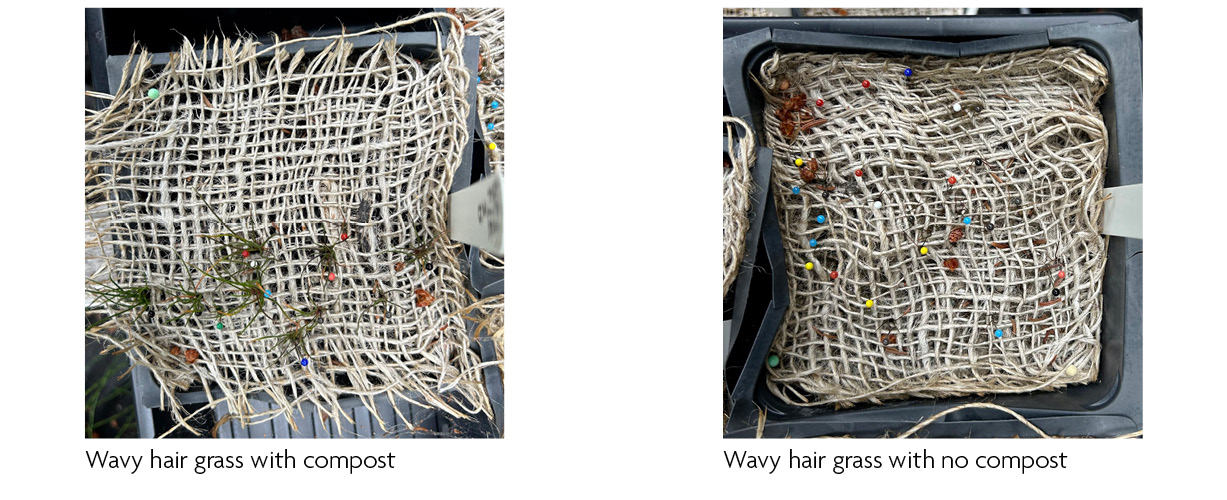
I investigated whether adding compost to restoration soils can improve the germination and growth of summit plants. The idea is simple: give the plants more of the organic matter and nutrients they need to take root and grow larger. Increasing this growth resilience matters more than ever. Warmer winters, late frosts, and intense rains add pressure to natural cycles. As climate change accelerates, it alters weather patterns and seasonal cues. Fragile plants that have evolved over centuries to grow in a specific climate now receive mixed signals they can’t appropriately respond to. Without active restoration of this vegetation, many vulnerable mountain summit plants and their essential ecological functions, such as oxygen production, food and habitat structures for wildlife, and carbon sequestration, may be lost.
The work itself wasn’t often glamorous, full of early mornings, counting tiny seedlings barely the size of my fingernail, and photographing them at a clear, perfectly leveled angle. Nevertheless, this experience was deeply rewarding. Watching new shoots push through the soil was like witnessing the park breathe just a little easier. And when I got to view the world from the mountain summits, I was reminded of the larger ecosystem my work was connected to. As I felt my knowledge of the natural world expanding, my desire to conserve it expanded too. The results of my study were hopeful. Compost appeared to increase plant biomass, which means plants build larger and healthier root systems that hold soil together, reducing erosion.
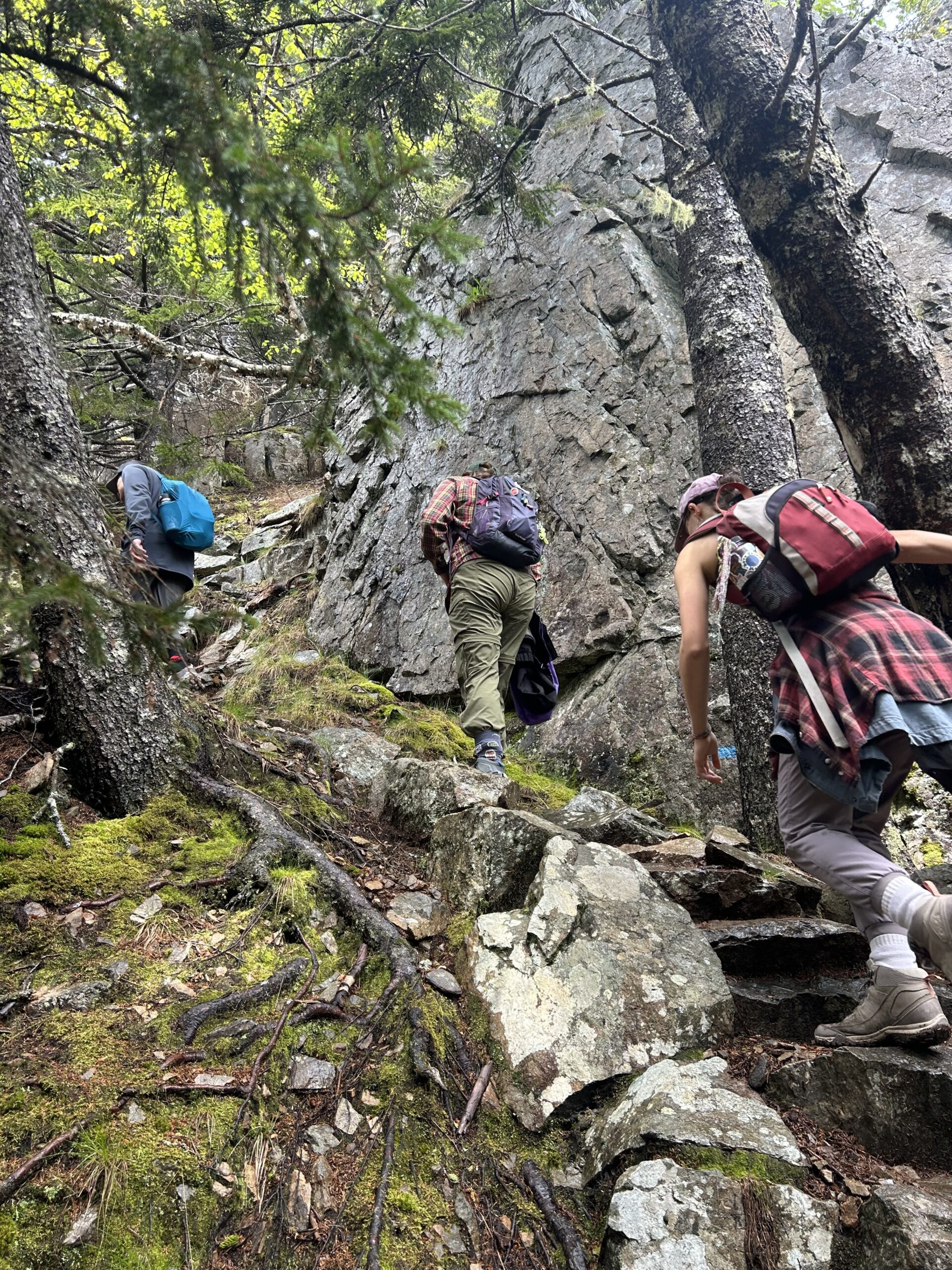
Throughout my time here, I was also fortunate to meet and learn from those currently working to protect and steward this land. Everyone here has not only been incredibly knowledgeable and enthusiastic about their fields of work, but also displayed their dedication to the environment in all aspects of their lives. For example, Schoodic Institute staff are participating in an iNaturalist competition while contributing to citizen science initiatives, spending time outside of their busy schedules to identify organisms out-and-about, and furthering our understanding of the wildlife in the park. And on hikes together, my roommates pointed out birds by their songs, identified plants I’d never noticed, or explained which species, such as the presence of river otters, can reveal the health and functioning of an ecosystem.
This dedication has shown me that environmentalism isn’t confined to a work schedule; it’s a way of life. I also had the privilege of working closely with the Schoodic science team, who helped me deepen my understanding of the research process. They taught me how to ask better questions, think critically about data, and approach complex problems with patience and creativity. I will carry with me the skills and knowledge I’ve gained well beyond this summer and into my future as a conservationist.
Currently, humanity is creating many challenges for nature to overcome. These obstacles appear to be growing much larger, and I have often fallen into feelings of hopelessness when contemplating the future of our planet. Nevertheless, after seeing such hardworking efforts from everyone here at Schoodic Institute, I can’t help but feel hopeful. This experience has not only taught me more about the natural world around me, but reaffirmed my devotion to helping conserve it. Much like the sunrise on Cadillac Mountain, Schoodic Institute scientists and everyone working to protect Acadia National Park have shone brilliantly, providing a much-needed light in times of darkness.