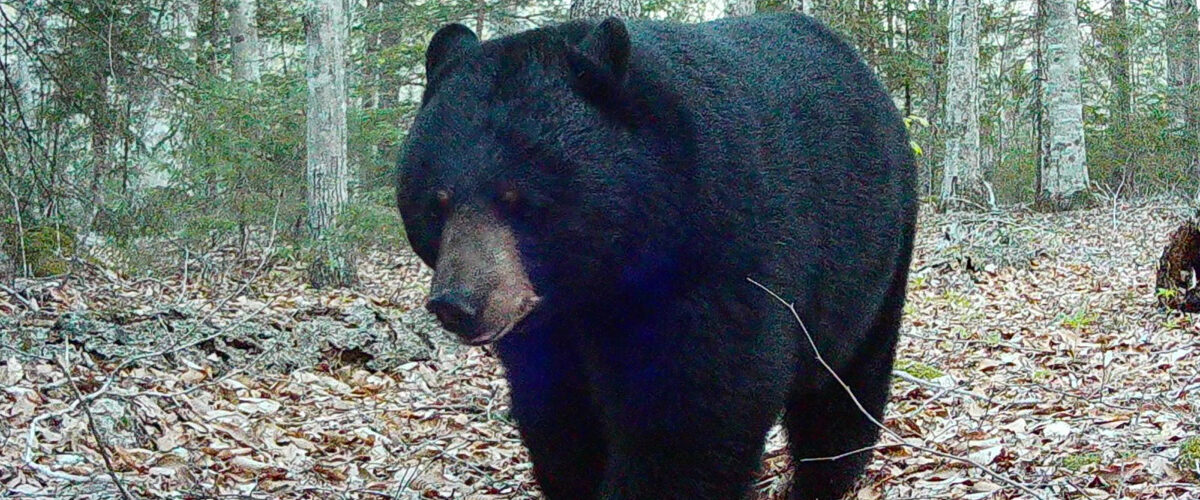
by Molly Donlan
Black bears across New England are currently in the midst of hibernation, tucked away and protected from the worst of winter’s bitter wind and ice. But it won’t be long before the snow melts away, temperatures rise, and groggy bears emerge from their dens in search of a Spring breakfast.
Historically rare, black bear sightings in Acadia and the surrounding area have increased in the last few years, and most notably during the summer of 2025, on both Mount Desert Island and Schoodic Peninsula. Changes in bear population and behavior have prompted Acadia’s wildlife biologists and collaborating researchers to update what they know about bears and the resources bears use within the park. Has the black bear population grown? Or are bears entering areas of the park they previously avoided? How are the bears here related to each other? These are just a few of the questions biologists have in mind when developing future plans for monitoring black bears in Acadia.
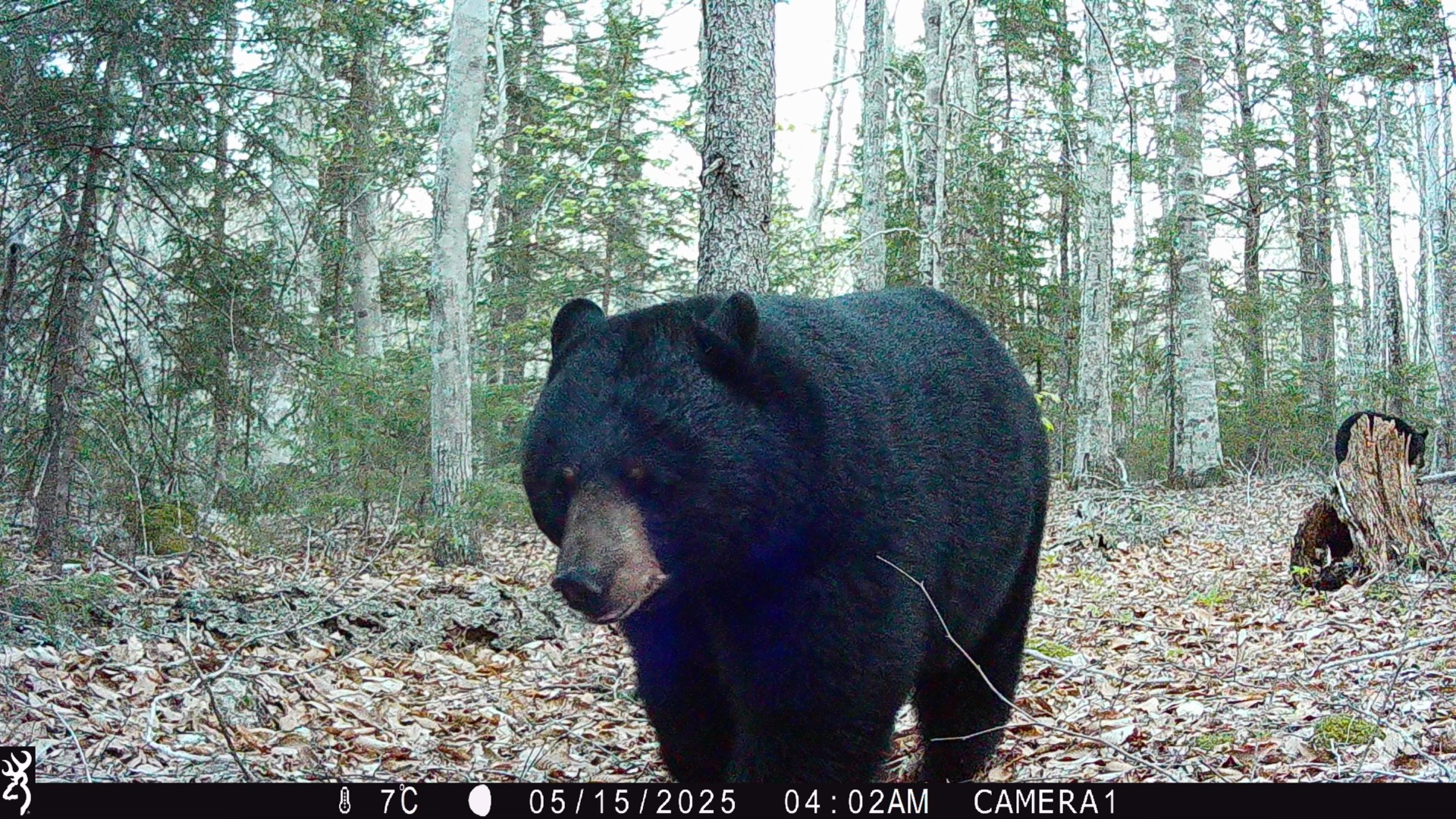
Black bears are widely distributed across North America and are the only bear species in Maine. They primarily live in forested habitats and can thrive in many different forest types. Forest trees provide cover and a place to climb away from potential threats. Living close to water is also important both for drinking and a way to cool off during the heat of summer. Due to their need for lots of calories, food abundance is one of their primary considerations in deciding where they make their home.
Ideally black bears live close to many different environments, because each provides different food sources: deciduous forests provide nuts and leaf buds, conifer forests are rich in seeds, open shrubby areas are a great place to forage for berries, wetlands have bountiful grasses and rhizomes, and meadows are ideal for finding insects and small mammals, all of which make up a black bear’s diet throughout the year. In the fall bears will eat larger volumes and their metabolism slows down, allowing them to store fat for hibernation.
Black bears will make their dens for hibernation inside hollowed trees, below upturned root wads, within large rock crevices, or even under brush piles. When black bears hibernate they do not enter a deep sleep that lasts through the entire winter. They keep their bodies warm enough to wake up and move around if necessary and will sometimes switch dens several times during the hibernation season.
Black bears in Maine begin their hibernation between October and December. If a bear can bulk up earlier in the season thanks to an abundance of nutritious food, they may begin hibernating earlier. If a bear is thin when autumn rolls around, it may delay hibernation to spend extra time building its fat reserves. They typically end their hibernation and return to normal activity levels between April and May, although this timing is dependent on their body condition and the environment.
When their natural food sources are not available or are less abundant, bears, known for being intelligent and opportunistic, will look for food elsewhere. Black bears typically avoid areas with people, but if food is scarce they may feed from gardens, bird feeders, or garbage cans.
Bears can become accustomed to obtaining food from such sources, coming back for more and even teaching their cubs to rely on them as well. Seeking food from humans, even if it is indirect, can de-sensitize typically timid bears to close interactions with humans. This creates dangerous circumstances for humans, their animals, and the bears themselves. Additionally, bears seeking out food in populated areas instead of forests means they are closer to roads, which increases their risk of a vehicle strike.
What can Acadia visitors do for black bears?
One of the best ways to support a healthy black bear population, in Acadia and elsewhere, is practicing good food storage. If you are camping or picnicking, never leave food more than an arm’s reach away, and when not in use store food and scented items in a bear box or a locked car. At home you can keep bears away from human food sources by keeping trash locked up or inside until further disposal, and only putting bird feeders out during the winter when bears are hibernating.
Hikers can keep black bear populations in Acadia healthy, too, by keeping themselves safe. Before you get on trail, inform yourself on what to do if you encounter a bear. If you are hiking with your dog, make sure it is always on leash, and the leash is no longer than 6 feet. A dog that chases or lunges at a bear is likely to be seen as a threat and may prompt the bear to act defensively.
If you see a bear in the park, please let us know! Submit a narrative of your sighting through the form linked at the bottom of this webpage, and be sure to include details on the timing and location, as well as what you saw the bear doing. If you were able to snap a photo of a bear or any sign of a bear, such as scat or tracks, we also encourage you to submit it to iNaturalist. iNaturalist makes it easy for users to submit observations of animals (not just bears) and plants, and for resource managers to gain information on what species people are seeing. Observations submitted for Acadia are compiled into a weekly report sent to resource managers.