Trees of Acadia: The Past, Present, and Future of Park Forests feat. Catherine Schmitt and Panel
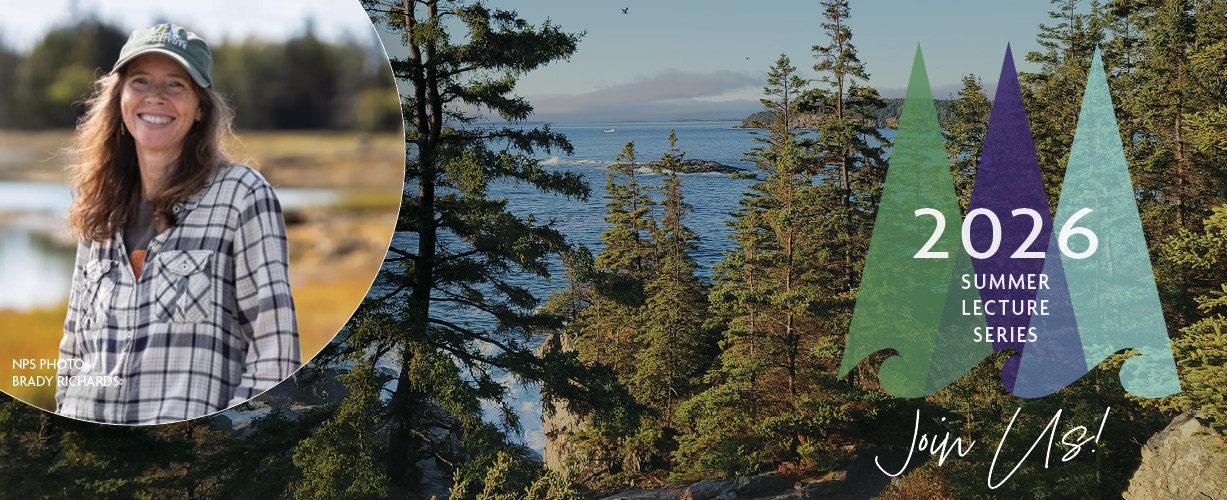
Join us in person at Schoodic Institute or online via Zoom on Tuesday, August 11 at 7:00pm for Trees of Acadia: The Past, Present, and Future of Park Forests, featuring author and Science Communication Specialist Catherine Schmitt with Matthew Duveneck (forest ecologist and Schoodic Institute Second Century Stewardship Fellow), Kate Miller (quantitative ecologist with the National Park Service Inventory and Monitoring Division), and Allen Workman (author and historian).
Register HereFrom the sharp spires of spruce and fir at the edge of ocean cliffs, to mountain forests, cedar swamps, maple meadows, and pine barrens, Acadia National Park would not be Acadia if not for the trees. The most common ecosystem across the park, forests support a diversity of wildlife, protect lakes and streams, and clean the air. These forests are special for many reasons.
Located in a transition zone between warm temperate forest and cool boreal forest, between mountains and the sea, Acadia’s trees support a unique assemblage of plants, animals, lichen, and moss. Under Wabanaki care for millennia, trees inspired action that resulted in conservation of what became Acadia National Park.
Today, Acadia hosts some of the oldest and healthiest woodlands in the Eastern United States, but their future is uncertain. Schoodic Institute Science Communication Specialist Catherine Schmitt discusses her new book, Trees of Acadia, with a panel of experts: author and historian Allen Workman on Schoodic Peninsula’s logging history; National Park Service ecologist Kate Miller on the current state of Acadia’s trees, and Second Century Stewardship Fellow Matthew Duveneck on the future of the forest.
About Catherine Schmitt and panel — Matthew Duveneck, Kate Miller, and Allen Workman
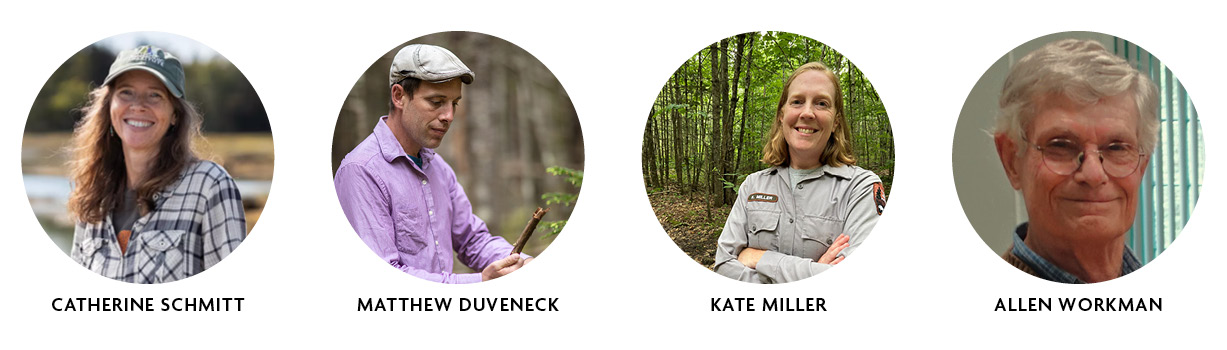
Catherine Schmitt writes about science in and beyond Acadia National Park for Schoodic Institute, with stories also published by the National Park Service, Friends of Acadia, Maine Coast Heritage Trust, Maine Audubon, National Parks Traveler, Island Institute, the Center for Northern Woodlands Education, and other websites, magazines, newspapers, and journals. Trees of Acadia: The Past, Present, and Future of Park Forests, published by Down East Books in Spring 2026, joins other books, Historic Acadia National Park, The President’s Salmon, and A Coastal Companion. She earned an MS in ecology and environmental science from the University of Maine and a Stonecoast MFA, and she has experience studying wetlands, beaches, lakes, streams, and forests across the Northeast.
Matthew Duveneck is a forest ecologist and Schoodic Institute Second Century Stewardship Fellow whose work bridges the gap between complex forest modeling and education. He currently serves as a member of the Liberal Arts faculty at the New England Conservatory, while also maintaining a role as a research associate at Harvard Forest. His research primarily focuses on simulating future forest trajectories, examining how climate change, land-use regimes, and disturbances like wildfire and insects will reshape the landscape. A former wildland firefighter, Duveneck brings a practical perspective to his academic scholarship, which has informed conservation strategies for various land management organizations like The Nature Conservancy and the National Park Service.
Kate Miller is a quantitative ecologist with the National Park Service Inventory and Monitoring Division. For 20 years she has led forest health monitoring for 21 parks from Maine to Virginia, along with freshwater wetland monitoring in Acadia National Park. Her MS and PhD are from the University of Maine and BS is from Northland College. She is a founding member of the Resilient Forest Initiative, a regional NPS initiative to increase capacity for forest management in eastern national parks.
Allen Workman is the author of Schoodic Point: History on the Edge of Acadia National Park. He writes and edits the publications of the Gouldsboro Historical Society, including a book on Gouldsboro’s early history, and has presented or hosted numerous lecture programs on historical and ecological changes in the Downeast region, based on over 80 years getting to know the forests and shores of the Schoodic Point region that surround his family home.
Schoodic Institute’s 2026 Summer Lecture Series events are free, thanks to support from our generous sponsor, Bar Harbor Bank & Trust.