by Gillian Audier
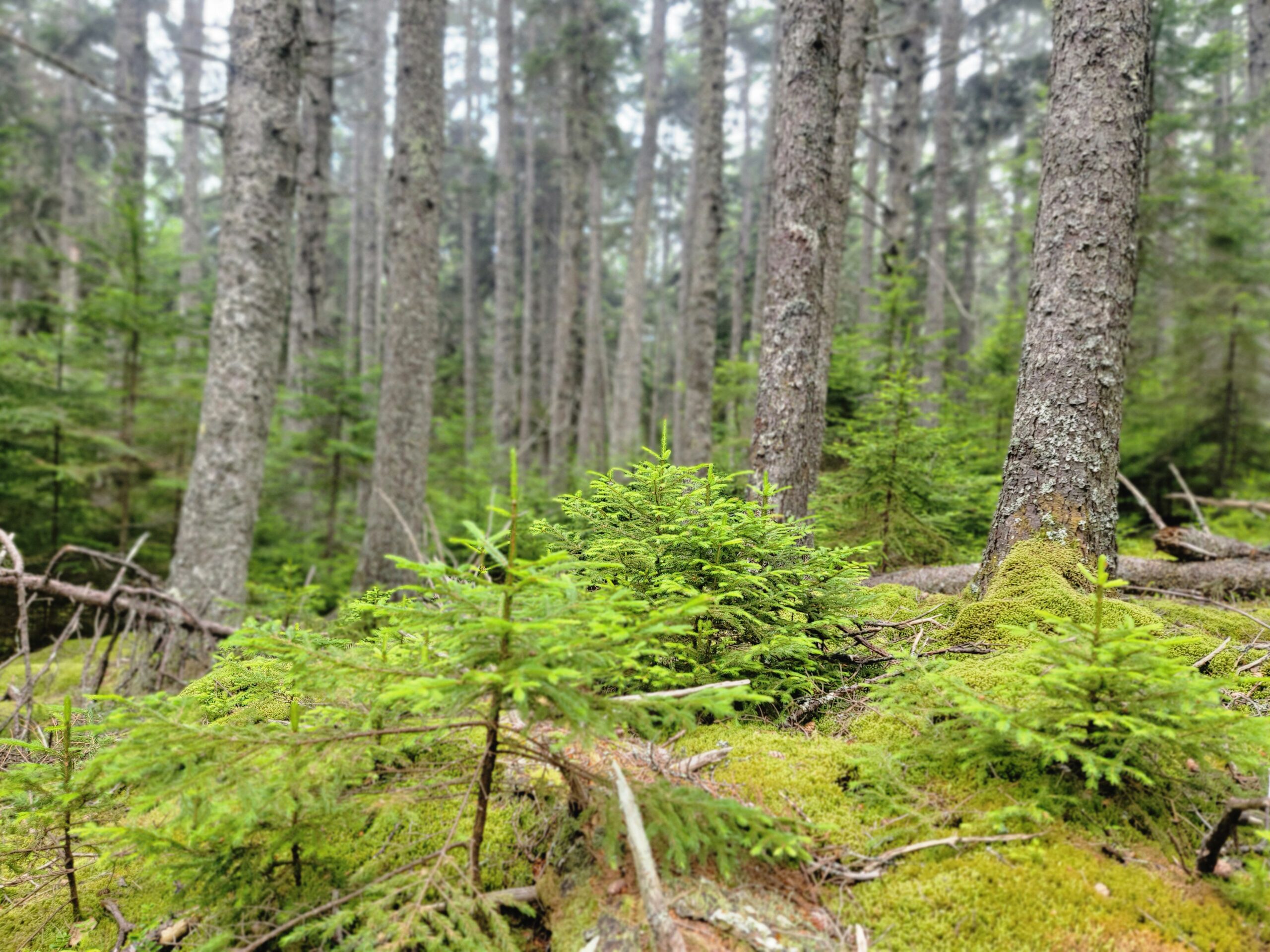
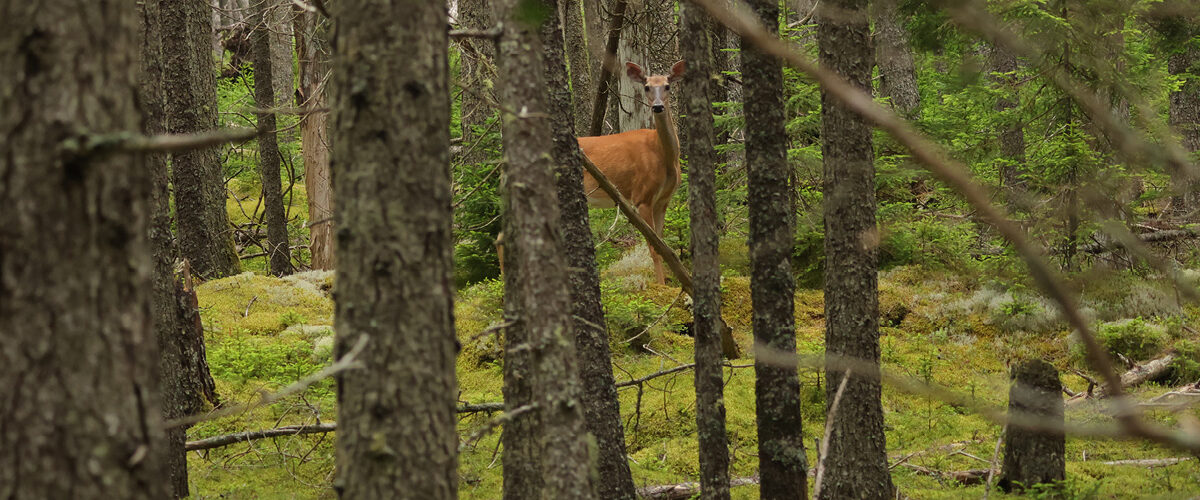
Coastal forests, made up of a mixture of red spruce and balsam fir, are a defining feature of the landscape of Mount Desert Island. This past summer, as the Cathy and Jim Gero Acadia Early-Career Fellow in Science Research, I spent months experiencing these forests while conducting breeding bird surveys. This research followed in the footsteps of Dr. Ronald Davis, who first surveyed birds at these sites in 1959. My goal was to replicate his surveys as closely as possible, more than 65 years later, documenting the bird communities that inhabit these unique coastal ecosystems.
The surveys took place in five different spruce-fir forest stands on Mount Desert Island where Davis completed his research as a graduate student at the University of Maine. His methods involved conducting stationary surveys along a transect, between sunrise and 9 a.m. In this type of survey, the observer stands silently for five minutes and records every bird seen or heard. Between June and July, I planned to follow these methods and replicate the surveys three times to capture the bird community during the height of the breeding season.
A critical part of preparing for these surveys was learning to identify every bird species that might occur in these forests by sound alone. Dense conifer canopies often limit visibility, making auditory identification essential. In the weeks leading up to the field season, I spent much of my time memorizing the songs and calls of more than 50 bird species.
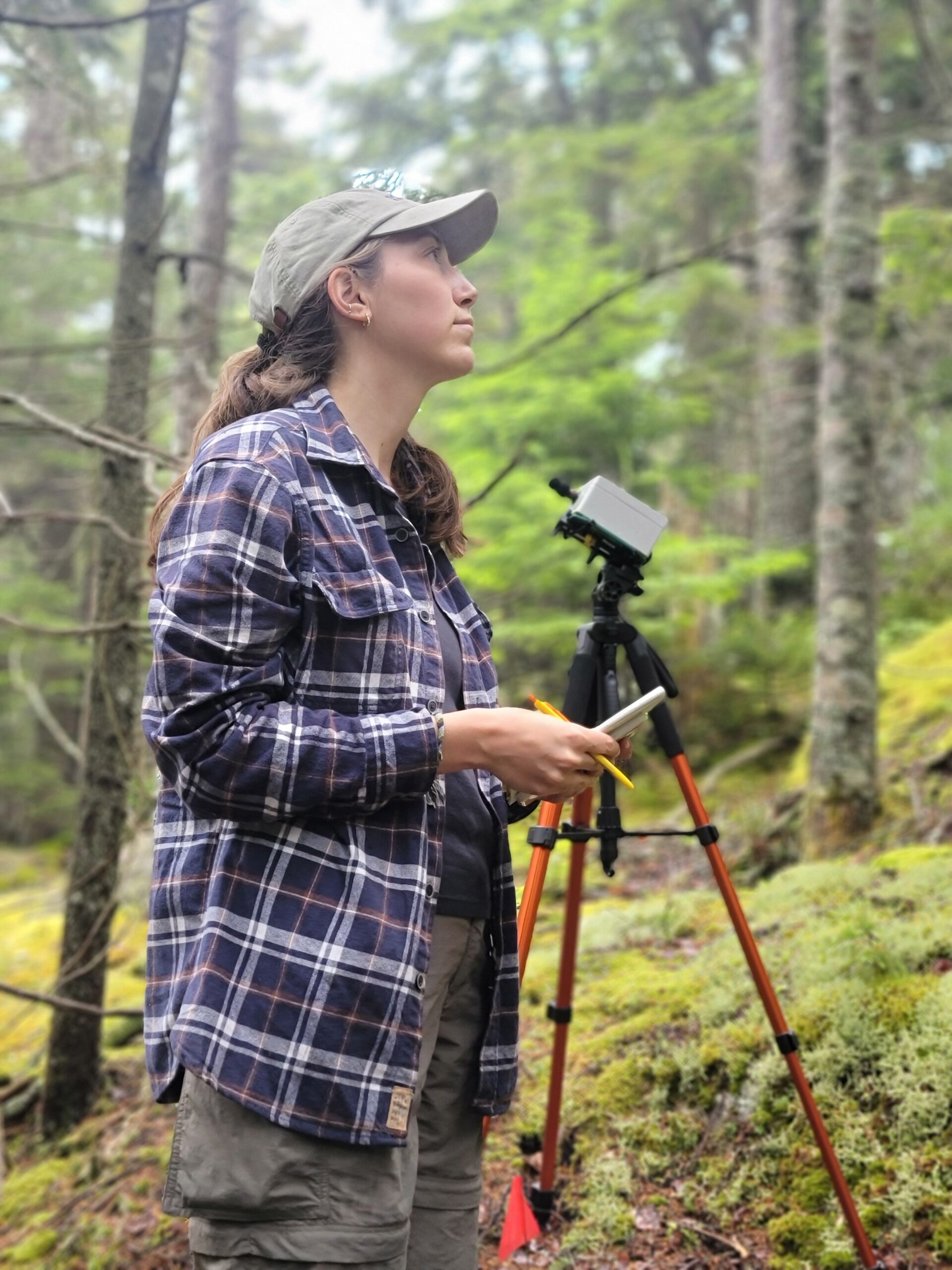
Once early June arrived and most migrating birds had returned to Maine, the focus shifted from preparation to fieldwork. Early mornings meant leaving before sunrise, driving an hour and a half to survey sites, then hiking into the woods with binoculars and data sheets in tow. In the two months I conducted this research I spent over 45 hours in these woods yet their beauty always remained novel. Often when I first arrived, the forest was still shrouded in morning mist. Moss and lichen carpeted the ground and hung from branches in intricate drapery. Early morning light filtered through the canopy in scattered beams, illuminating tiny motes of pollen and dust.
I tried to remain as still and silent as possible for a couple minutes before beginning the survey to give the birds a chance to get used to my presence. More often than not, I heard birds long before I could see them. From high in the canopy, Black-throated Green Warblers and Golden-crowned Kinglets sang continuously, while the flute-like melody of Hermit Thrushes carried through the forest from farther away. Listening closely and carefully parsing overlapping songs was the core of the survey, turning sound into a map of where the birds were moving around me. I occasionally had unexpected encounters with the other residents of the forest as well. I ran into porcupines moving slowly through the undergrowth, an Ovenbird nest hidden in the leaf litter, and uncovered deer antlers stained green by moss.
Each site had its own character, supporting a slightly different bird community, shaped in part by forest structure and exposure. Sites located on narrow coastal peninsulas were more open and influenced by ocean winds, while inland and higher elevation sites maintained denser, closed canopies. Across all sites, the surveys revealed a common pattern: many bird species that Ron Davis detected frequently, I encountered less often, and overall bird activity was noticeably less. The woods I experienced were quieter than when Davis conducted his research. These local observations mirror broader patterns documented across North America, where bird populations have declined substantially over the past decades. Scientists have attributed these declines to a combination of habitat loss from urbanization and agriculture, climate change, and other anthropogenic pressures like pollution and migration hazards.
A highlight of the project was meeting Ron Davis in person. After receiving his Ph.D. and finishing his coastal spruce-fir dissertation, Davis went on to study the forests, lakes and peatlands of New England and beyond, often utilizing fossils and geology to study the ecosystems of both the past and present. Sitting together in his home, I had the opportunity to share the results of my work and listen as he reflected on his time surveying decades earlier. We talked about specific species of interest, slight differences in methods and our shared admiration for these forests. It was a truly unique experience hearing his memories of doing field work in the same place I did but separated by more than half a century.
Walking the same trails, listening for the same songs, and witnessing the subtle transformations in forest structure, I gained a deep appreciation for both the resilience and vulnerability of coastal spruce-fir ecosystems. It is a reminder that ecological research is a long term endeavor, one that relies on both patience and a willingness to return to the same places again and again, listening closely to which sounds remain, and which have grown quieter.