by Hannah Webber
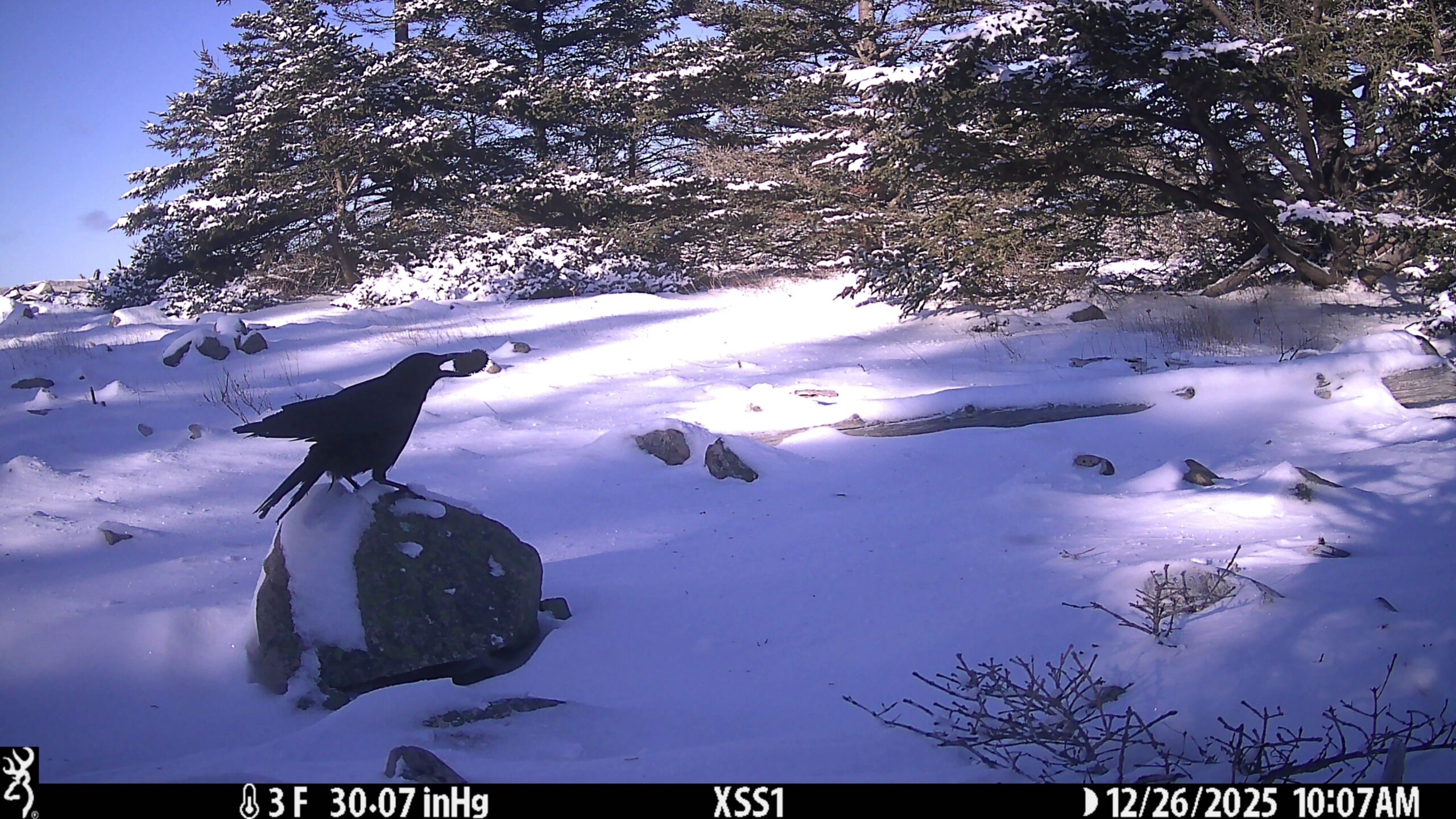
Crows eat everything. It’s in their nature. Learning that they eat green sea urchins, however, has been quite surprising. Spiky sea urchins are not easy prey. Urchins like to hide, in fact they are exceptional at it, working themselves into small crevices or aggregating in the deepest parts of tidepools, they fastidiously layer shell parts, bits of seaweed, and small pebbles over themselves as camouflage from predators. Imagine a crow, going into deep water (relative to the size of a crow), identifying an urchin laying under the disguise of ‘looking just like every other part of the ocean bottom’, prising the urchin (holding fast to the rocks with hundreds of tubefeet) from its rocky watery habitat, and flying victorious into the forest to peck away at the bottom of an urchin to consume a high calorie meal. This is where our paths cross, the crow and the researcher–when we capture images of crows consuming urchins on game cameras, and find empty urchin tests in the forest long after the crow is gone.
Around the Schoodic Peninsula we have installed game cameras, and are looking for remnant shells under the tree canopy, at the edge of the ocean, to help us answer questions about the coastal forest food web.

If you walk the forest edge along the coast of Maine you will find shells: mussels, crabs, the occasional lobster claw, urchins. These ocean animals did not walk into the forest themselves. Were they pushed there by waves or the wind, as lobster buoys are? Our experiments suggest not. Crows, as well as otters, mink, racoons, fox, and other animals from the forest, or from the air, venture into the intertidal zone and the shallows beyond to hunt and eat ocean animals. Up in the forest they leave behind shells and poop filled with fish scales.
This movement of energy, in the form of food, from ocean to land, does it matter? Is it a big part of the diet of animals? A small, seasonal part? Are ocean animals a food of last resort? Does eating ocean animals allow the populations of these predators to grow, or control the prey populations? We don’t know.
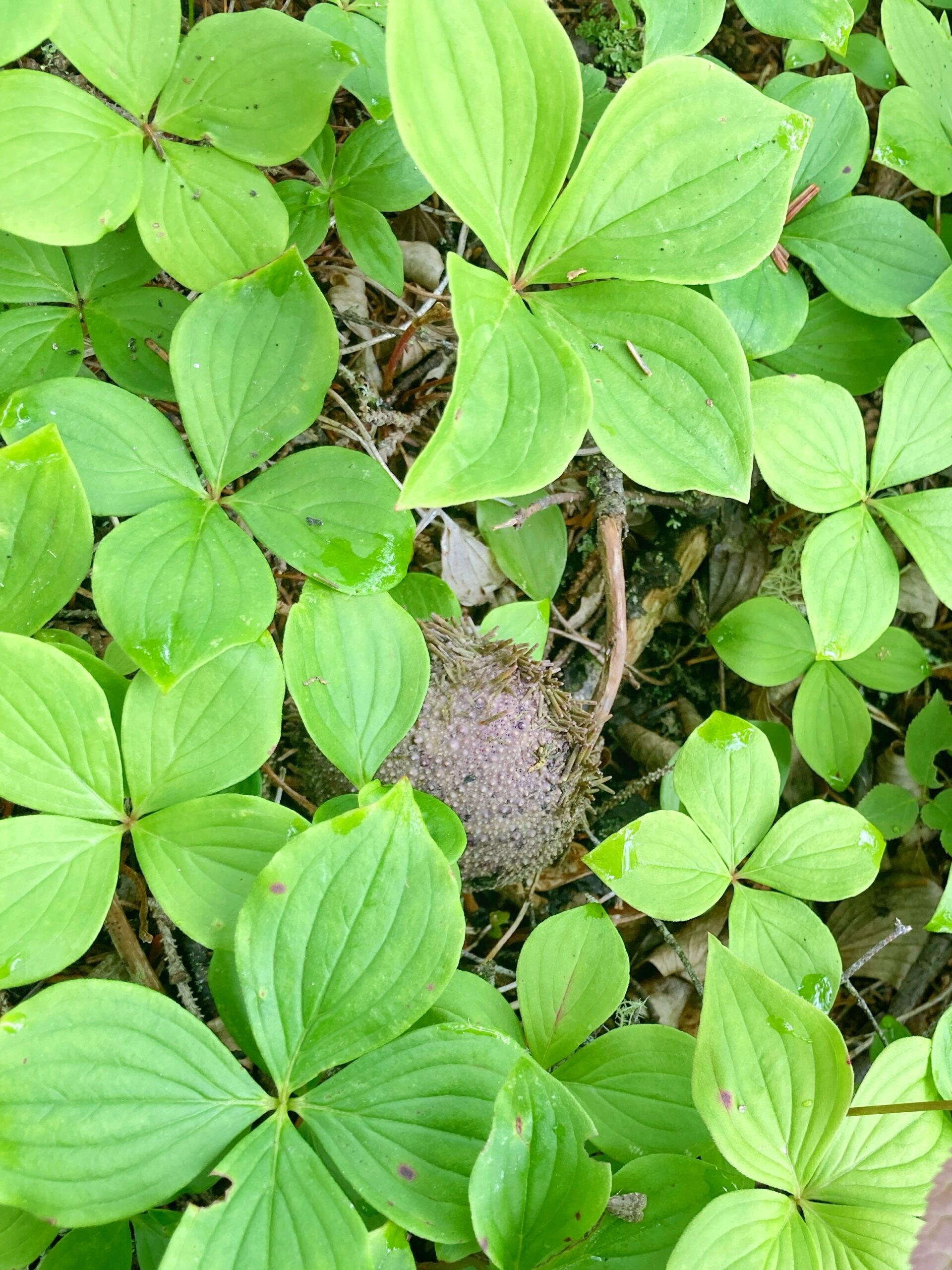
So why bother tromping through snow and ice to maintain game cameras, or treading through poison ivy to collect data on shells left behind amidst the bunchberries? And for those animals, like otters, that feed down in the intertidal zone, why bother collecting and pulling apart poop to identify prey species? Because dynamics at the land-sea interface are changing from pressures on land and at sea. Mussels and urchins, the majority of ocean animal remains we find in the forest, are both at very high risk from a warming and acidifying ocean. On land, we humans build roads to new houses. We revise and rebuild the humanscape when storms tear away existing infrastructure, moving washed out roads and hardening shorelines. It’s not the same “one if by land, two if by sea” we grew up with, in fact it’s more a one-two punch to an ecosystem on the edge, and the coastal forest food web is changing as a result. This is the focus of our “Cross-System Subsidies” research project.
The Convention on Conservation of Migratory Species of Wild Animals defines ecological connectivity as “the unimpeded movement of species and the flow of natural processes that sustain life on Earth.” While we are talking about land animals going to the ocean for food, and not migration, the principle remains the same. Connectivity is essential for species and ecosystem resilience.
On the Schoodic Peninsula, we have land animals foraging for ocean animals, and we have human interruption of the flow of animals on low and varying levels (seasonal changes in human visitors, a road roughly paralleling the irregular edge of the ocean, but varying in just how close that parallel is). This makes Schoodic an excellent place to study the coastal forest food web, and apply what we learn here to places where shoreline stabilization is occurring, to places where new roads and infrastructure are going in, to places (like offshore islands) where more vulnerable animals live, and eventually, if and when changes are made to the Schoodic Loop Road, to our very own backyard.
Whether it’s mink, or crows, otters, raccoons or foxes, animals need a connected ecosystem. We’re studying the strength of those ocean-to-forest connections to manage for a changing world.