The Mountain Summit
by Julia Rush
Sea to Trees is a podcast that tells the stories of the science happening in and around Acadia, from the rocky shoreline to the evergreen forests to the granite mountaintops.
This season we’re getting up-close and hands-on at three different ecosystems in Acadia to get a feel for what it’s like studying science here.
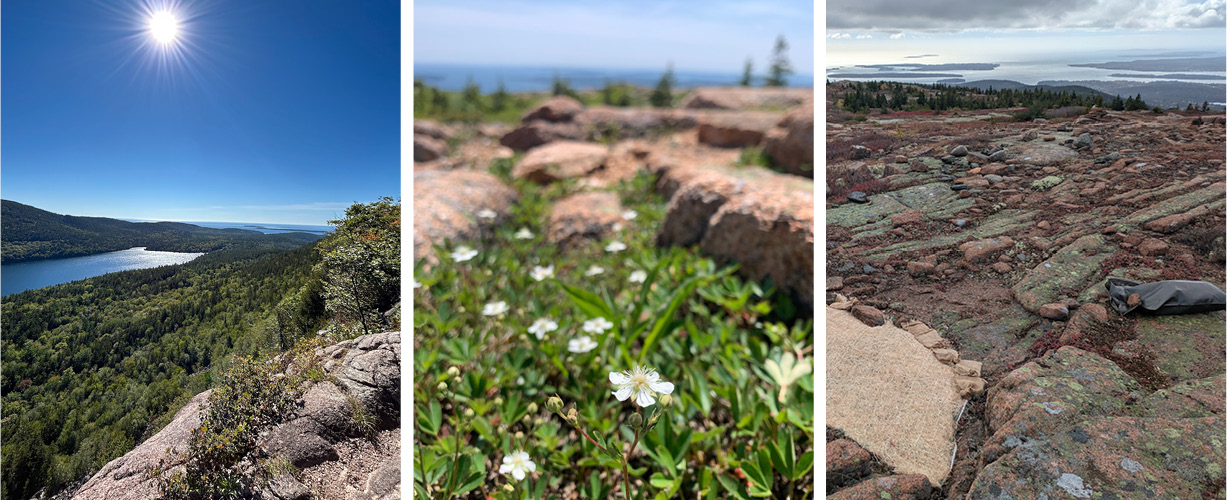
High atop Acadia’s mountain summits are sweeping views, subalpine plants, and an ecosystem under threat. Come with me as I take part in each step of a field season and learn about how scientists are working to help restore these unique places.
In this episode, we’ll hear from Amina Wilson, Restoration Research Associate at Schoodic Institute, about what it’s like to work on a mountaintop. Dr Chris Nadeau, Climate Adaptation Scientist at Schoodic Institute, will explain some of the threats facing summits and why this restoration is critical. We’ll also hear from Lauren Knierim, who is the Community Volunteer Ambassador for Acadia National Park and lead hikes throughout the summer to get soil up a mountain.

Reference Links:
- Soil is Key: https://schoodicinstitute.org/soil-is-key/
- 2024 Summit Restoration Update: https://www.nps.gov/articles/000/to-seed-or-not-to-seed-a-2024-update-on-summit-restoration-in-acadia.htm
- How to Save a Summit: https://www.nps.gov/articles/000/summitacad.htm
- Save Our Summits Hikes: https://friendsofacadia.org/get-involved/events/save-our-summits-registration/