Posted in

by Julia Rush

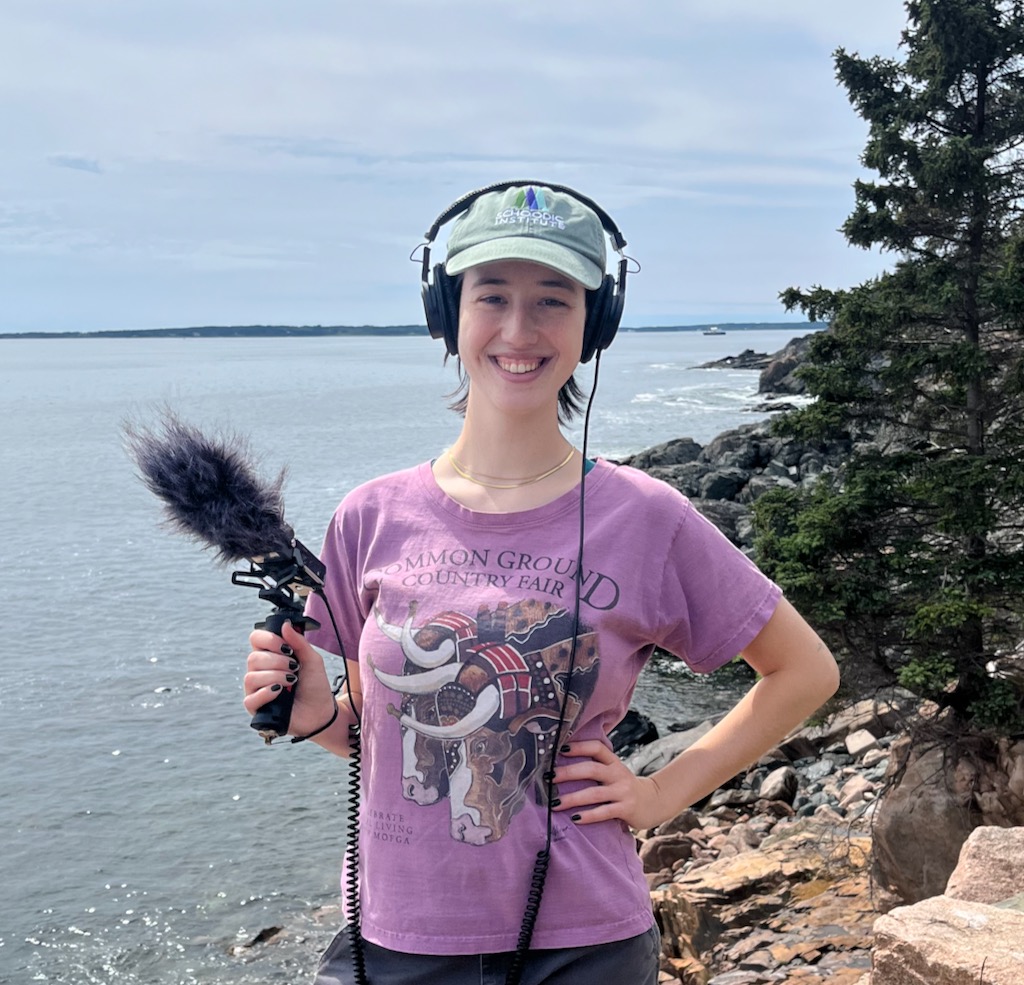
Julia Rush holds podcasting equipment while smiling for the camera near the coastline
Julia Rush, pictured here, is our host for Season 4.

When I started my fellowship at Schoodic Institute it was somewhat of a homecoming for me. I was born and raised in Downeast Maine but spent the last few years at college in Boston. Growing up, I spent so much time exploring the woods behind my house, scrambling on cobble granite beaches, and hiking mountains in Acadia. So many trails, streams, cliffs, beaches – the ecosystems that make up this incredibly varied region hold memories and stories for me.

Moving onto Schoodic Institute’s campus, where as a middle-schooler I took part in the Schoodic Education Adventure program, and starting to record audio for this season of Sea to Trees felt like catching up with an old friend. Except, I am getting to know this friend in a very different way than I ever have, through the science and restoration work happening in the park. After talking myself in circles about a theme for this season I found myself naturally sharing my stories about this place with my roommates, friends, and colleagues. I was connecting with the science here through my relationship with the place I call home. This season I studied research and restoration in three different ecosystems in Acadia and recorded along the way to bring you an up-close and personal view of this work and these places.

I am so excited to share the trailer for Sea to Trees Season 4 | Place-based Science. You can listen to the trailer now on nps.gov or Apple Podcasts, and episode one will be released December 2025.
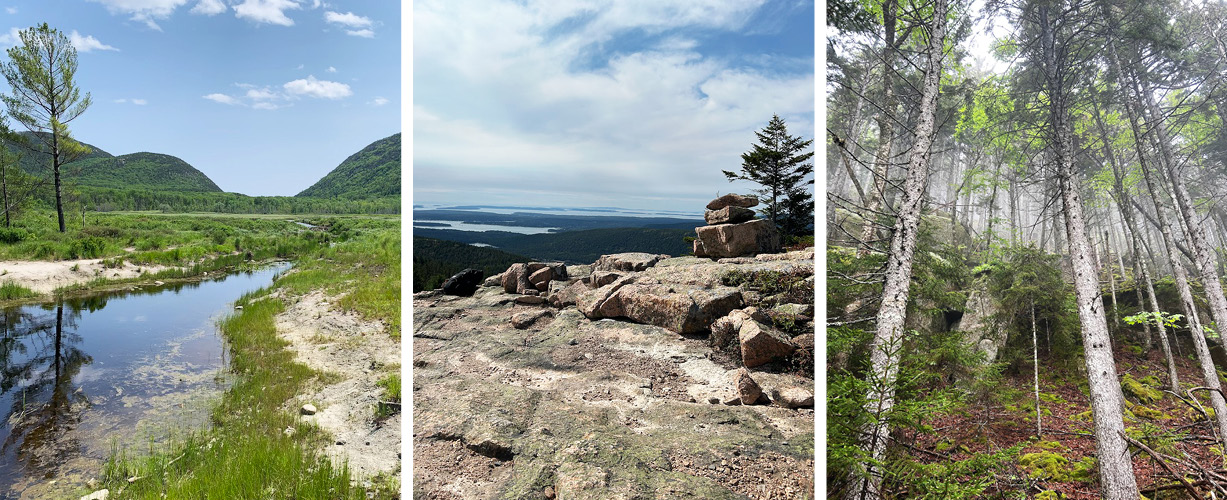

Collage of 3 photos: 1 - The 100-acre Great Meadow Wetland which is undergoing a restoration project that includes a culvert replacement, plant monitoring and a pollen study. 2 - A view from one of the summit restoration plots atop Sargent Mountain. Summits are home to subalpine ecosystems that face vegetation loss and erosion from human recreation and storm events. 3 - The spruce-fir forests in Acadia face an uncertain future with the effects of climate change. Park scientists are closely monitoring changes in these forests.
1) The 100 acre Great Meadow Wetland which is undergoing a restoration project that includes a culvert replacement, plant monitoring and a pollen study. 2) A view from one of the summit restoration plots atop Sargent Mountain. Summits are home to subalpine ecosystems that face vegetation loss and erosion from human recreation and storm events. 3) The spruce-fir forests in Acadia face an uncertain future with the effects of climate change. Park scientists are closely monitoring changes in these forests. Photos by Gillian Audier and Julia Rush

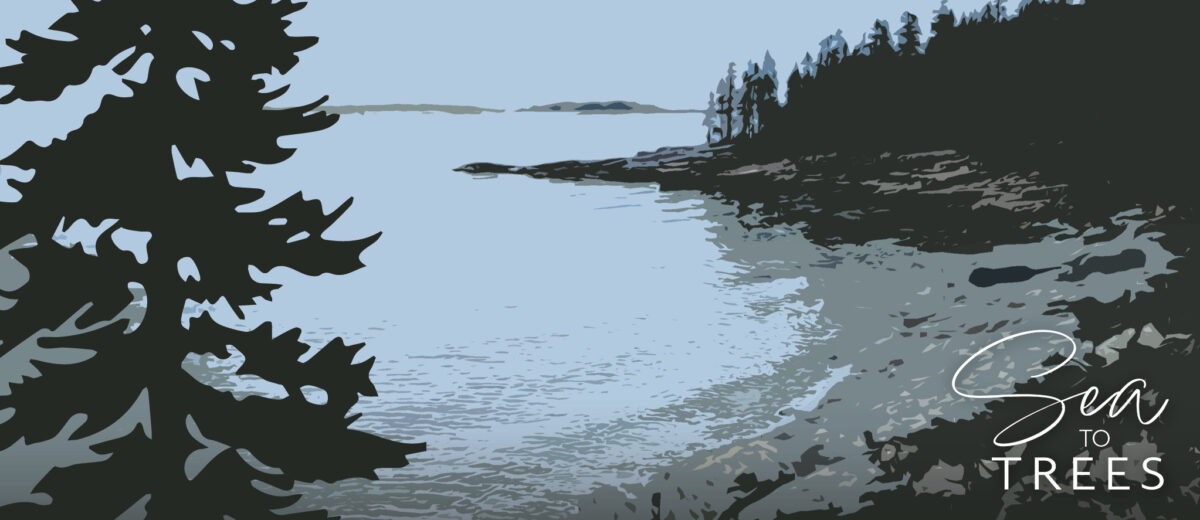
Illustrative graphic cover art for the podcast. Sea to Trees, which depicts a tree in the foreground, the intertidal zone in the mid ground, and ocean at the left with the horizon line off in the background. A cool color palette is used for the image - blues, deep greens, and grays.