by Amina Wilson, Restoration Research Associate
Summer is in full swing around us and a green blanket has covered the land. The warmth brings lushness, blending grass and trees into a tangled mass of life and leaves. Looking closer uncovers important differences, like the pale needles of a white pine or the bright leaves of an ash tree. Summer at Schoodic Institute is synonymous with field research, and noticing these differences is vital to a successful field season.
By July, technicians have found their groove in the early morning field work and data collection. Heading to Mount Desert Island at 7am each morning, my crew and I have been taking inventory of the plant species present in our invasive suppression plots. With 336 subsections to monitor, many days seem much the same at first.
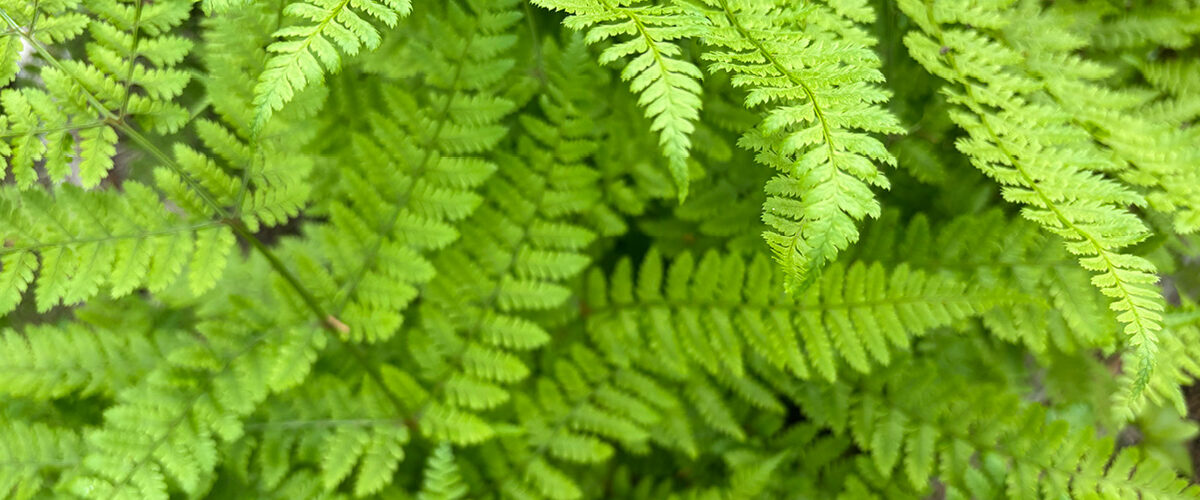
Staring down at a blanket of green, we mentally separate plant categories and estimate how much ground each one covers. We then identify every woody plant to the species level and estimate their ground cover. Then, something new is found! What could it be? We each take a look, feeling the leaves, sniffing the stem, looking for any useful hints toward its identity. Although many of our field days appear the same at first glance, exciting differences arise in the new plant identifications, cool wildlife sightings, or wholesome visitor interactions that occur.
Data collection and field work can sometimes be monotonous, much like the green of summer. In the fall, leaves are sure to change and patterns will emerge in the landscape once again. In ecology, we dedicate so much time and care into collecting data every field season. This meticulous process is performed with the understanding that fall analyses will bring to light patterns in the data that were not first visible during collection.
With that comfort in mind, enjoy the green, sweet, warm routine of summer while it is here!